Best time to visit Senegal: the Petite Côte month by month
By Demba Sene · Published · 7 min read
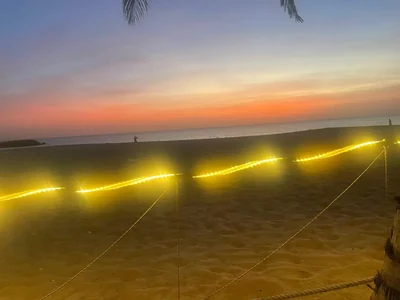
When is the best time to visit Senegal? That's the question we're asked most often. The good news is that on the Petite Côte, the weather is beautiful for most of the year. But each season has its own character. From clear skies and cool seas in winter to warm waters and green landscapes during the rainy season, the best time to go depends on what you're looking for.
Here is our month-by-month guide to help you choose your dates wisely.
The two seasons of Senegal
In Senegal, we don't really talk about summer and winter. We distinguish between two seasons: the dry season and the rainy season, which is known here as the hivernage.
The dry season (November to June)
For eight months, there is almost no rain. The sky is blue, the air is drier, and on the coast, the sea breeze makes the heat very tolerable, with afternoons around 30°C. From December to February, the nights can even be cool, around 17°C to 18°C, so pack a light sweater for the evenings.
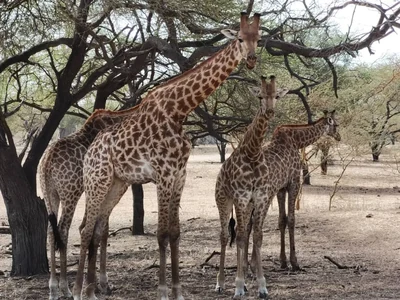
This is the ideal time for excursions: the tracks are dry, the animals in Bandia are easy to spot, the Pink Lake is at its most vibrant, and migratory birds are present.
The rainy season (July to October)
This is the rainy season, but it doesn't mean it rains all day. Rainfall often comes in the form of showers or thunderstorms, sometimes heavy, followed by beautiful sunny spells. August is the wettest month, followed by September. The air is hot and humid, and the sea reaches its highest temperatures of the year.
In return, the country transforms: the bush turns green, baobabs are covered in leaves, and the light is magnificent. The hotels are much quieter. It's an ideal season for those who love tranquility and don't mind the humid heat.
Senegal weather by month
Indicative temperatures in Saly and Mbour. By the sea, the breeze makes the heat feel milder than the numbers suggest.
| Month | Weather | Rain | Sea | Our opinion |
|---|---|---|---|---|
| January | Sunny, ~30°C, cool nights | Dry | 20 to 22°C | Very good period, high season |
| February | Sunny, ~30°C, sometimes hazy | Dry | 19 to 20°C | Very good period, cool sea |
| March | Sunny, ~30°C | Dry | around 19°C | Very good period, quieter |
| April | Sunny, ~30°C | Dry | 20 to 21°C | Excellent period, fewer people |
| May | Sunny, rising heat | Dry | 22 to 23°C | Very good period, sea warming up |
| June | Hot, first humid nights | Very rare | 25 to 27°C | Good period, pleasant sea |
| July | Hot and humid | A few showers | 27 to 28°C | Start of the rainy season, greenery |
| August | Hot and very humid | Wettest month | around 28°C | For lovers of tranquility |
| September | Hot and very humid | Rainy | around 29°C | Very warm sea, few people |
| October | Hot and heavy | Last showers | around 29°C | End of the rains, good compromise |
| November | Sunny, hot | Dry | around 27°C | Our favorite |
| December | Sunny, ~30°C, cool nights | Dry | 23 to 25°C | Very good period, end-of-year holidays |
The Harmattan, the desert wind
During part of the dry season, often between December and February, the Harmattan wind sometimes blows. This dry wind from the northeast carries fine dust from the Sahara. On some days, the sky turns milky and the sun is veiled. It's nothing to worry about for your vacation: these days alternate with clear blue skies. If you are sensitive or have asthma, just plan to protect yourself.
Why the Senegal sea temperature is cooler in winter
It's a surprise for many visitors: in February or March, the water can drop to around 19°C to 20°C, even when it's 30°C on the beach. The reason is a phenomenon called upwelling. During the dry season, trade winds push the surface water offshore, and colder water from the depths rises to replace it.
This phenomenon has a positive side: this cold water is very rich, and it is largely thanks to it that fishing is so abundant on this coast. What you see arriving in the pirogues in Mbour at the end of the day is, in a way, a gift from the upwelling.
For a really warm swim, it's better to aim for June to November. The good news is that the Petite Côte is sheltered, so the sea is often calmer here than north of Dakar.
Highlights of the year
- Migratory birds: From November to April, thousands of birds from Europe spend the winter in Senegal. The Djoudj National Bird Sanctuary, near Saint-Louis, hosts about one and a half million of them, with a peak from December to March. Closer to Saly, the Somone Lagoon is stunning from October to June.
- The Pink Lake: Its color is most intense during the dry season under a bright sun.
- Mangoes: The season starts in May and lasts for much of the summer. Try them from a roadside stall; they are nothing like the ones in Europe.
- The Saint-Louis Jazz Festival: Held annually, usually in May or early June.
- Major religious festivals: Tabaski, Korité, or the Grand Magal of Touba follow the lunar calendar and shift about ten days earlier each year. These are very significant moments in Senegalese life; some services may be slower during these times. Be sure to check the dates before booking.
So, when is the best time to visit Senegal?
- To combine beach time and excursions in the best conditions: from November to May.
- For warm sea temperatures: June, and from October to November.
- To see the country green and enjoy the peace and quiet: the rainy season (hivernage), from July to September.
- For bird watching: from December to March.
- For end-of-year holidays in the sun: December, as long as you book early.
And whatever the season, one week is enough to see the essentials. Our one week in Saly itinerary shows you how to organize it.
Before you go
- Currency: The West African CFA franc (FCFA), which has a fixed exchange rate with the Euro: €1 = 655.957 FCFA.
- Health: Malaria is present year-round. Protect yourself from mosquitoes, especially in the evening, and consult your doctor before you travel.
- Places of worship: Shoulders and knees should be covered; in mosques, you should remove your shoes.
- Photography: Always ask for permission before taking a picture of someone. Official buildings should not be photographed.
- Packing: Our article on what to pack for Senegal gives you a complete list.
A few words in Wolof
Senegalese people greatly appreciate it when visitors make an effort to say a few words in Wolof:
- Salaam aleekum: Hello (the reply is: Maalekum salaam)
- Na nga def?: How are you? (Reply: Maa ngi fi rekk, meaning "I'm fine, I'm here")
- Jërëjëf: Thank you
To understand the country's spirit of hospitality, also read our article on teranga.
Frequently asked questions about the best time to visit Senegal
Can you visit Senegal during the rainy season (hivernage)?
Yes. The rain mostly comes in showers, often followed by sunshine. It's hot and humid, but the sea is very pleasant and the landscapes are stunning.
What is the hottest month?
By the sea, the heat feels most intense between August and October due to the humidity.
Is the water warm enough for swimming in winter?
It is cool, around 19°C to 22°C from January to March. Pleasant for a refreshing dip, but a bit chilly for those who are sensitive to the cold.
Are excursions available all year round?
Yes. During the rainy season, we simply adapt the schedule to the day's weather.
Whether you're coming for the winter sun or the lushness of the rainy season, the Petite Côte awaits. Let us know your dates, and we'll tell you what you can see.
To go further
Our sources, and some useful reading to prepare for your visit:
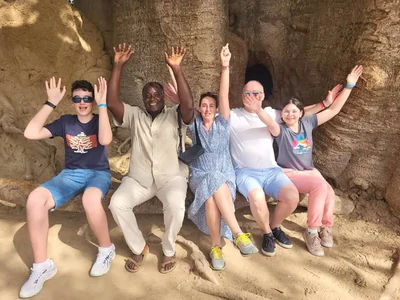
Demba Sene, guide and driver on the Petite Côte since 2000. He speaks French, English and Spanish.