Bandia Reserve safari from Saly: animals, what to expect and tips
By Demba Sene · Published · 5 min read
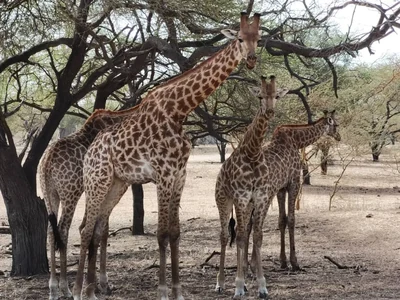
You might not have imagined seeing a giraffe during your vacation in Saly. Yet, just a twenty-minute drive from your hotel, they roam among the baobab trees. The Bandia Reserve offers the most accessible safari in Senegal: no need for long hours on the road or multi-day trips. A single morning is all it takes to encounter giraffes, rhinos, zebras, and giant antelopes, and be back in time for lunch by the pool.
Here's what to expect on a Bandia safari from Saly, and how to make the most of it.
The Bandia Reserve in a few words
Established in the early 1990s, Bandia is Senegal's first private reserve. It now covers about 3,500 hectares of savanna, acacia forests, and giant baobab trees. Animals that had disappeared from the region, or had never lived there, have been introduced and now roam and reproduce freely.
The tour is conducted in an open-top vehicle with a mandatory guide from the reserve. The guide knows the animals' habits and where to find them depending on the time of day and the season.
The animals of the Bandia Reserve
Giraffes
They are the stars of Bandia, and visitors almost always encounter them. They move in small groups, graze on the tops of acacia trees, and often cross the track right in front of the vehicle with incredible elegance.
White Rhinos
Seeing a rhino up close is a powerful experience. The ones in Bandia have had their horns removed to protect them from poaching—a safety measure that saves their lives. They spend much of their day grazing peacefully.
Zebras, Buffalo, and Antelopes
Zebras are often found near the giraffes. The more imposing buffalo tend to stay near waterholes. And there are numerous antelope species: impalas, Defassa waterbucks, greater kudus with their spiral horns, nyalas, roan antelopes, and blue wildebeest...
The Derby Eland, a Threatened Giant
This is the reserve's most precious animal. The Derby eland is the world's largest antelope and one of the most endangered, with fewer than 200 remaining in the wild. Since 2000, Bandia has been part of a conservation program in partnership with a Czech university. A few animals brought from Niokolo-Koba National Park have given rise to a herd of about a hundred individuals, split between Bandia and the Fathala Wildlife Reserve. Seeing them is witnessing a beautiful conservation success story.
Other Inhabitants
Keep your eyes peeled: ostriches, warthogs, patas monkeys and green monkeys, jackals, mongooses, crocodiles, and giant tortoises also live in the reserve. Bird lovers will be thrilled, with over 120 species recorded.
What you won't see (and where to see it)
Let's be honest: there are no lions or elephants in Bandia. If you're dreaming of lions, the Fathala Wildlife Reserve, further south in the Saloum Delta, offers a unique experience: walking with lions in Fathala on foot, accompanied by handlers. It's a full-day trip from Saly, but well worth the journey.
Much more than just animals
The Griot Baobab
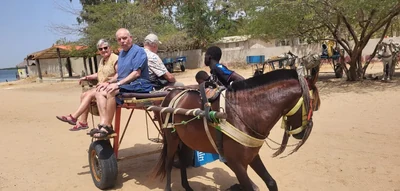
In the heart of the reserve stands a very old baobab with a hollow trunk. Like in Nianing, it once served as a tomb for Serer griots, whom tradition forbade from being buried in the ground. It's an astonishing place that should be approached with respect. If this story moves you, don't miss the sacred baobab of Nianing, which can be visited by horse-drawn carriage.
The Serer Burial Mounds
The reserve is also home to ancient Serer burial mounds, which are a reminder that this region has been inhabited for a very long time.
The Waterhole
At the entrance, a bar and restaurant overlooks a waterhole. Buffalo, monkeys, and crocodiles are often seen here. It's the perfect spot to enjoy a cool drink after your tour.
How the tour works
- Pick-up at your hotel early in the morning.
- About a twenty-minute drive to the reserve.
- Approximately two hours of safari in an open-top vehicle with the reserve's guide.
- A break at the waterhole, if you wish.
- Return to your hotel before the midday heat.
Full details are available on the Bandia safari activity page and the Bandia destination page.
Our tips for a successful safari in Bandia
- Go early: The animals are more active before it gets hot, and the light is better for photos.
- Dress in light, neutral-colored clothing, and bring a hat and sunglasses.
- Bring water and sunscreen.
- Remain seated in the vehicle and follow the guide's instructions.
- Never feed the animals.
- Speak softly: The animals are more likely to come closer.
Frequently asked questions about the Bandia safari
Are you guaranteed to see giraffes?
Nothing is ever guaranteed with wild animals, but giraffes are almost always spotted in Bandia.
Is the safari suitable for young children?
Yes, it's actually one of the most popular outings for families. The tour is short, and the vehicle makes frequent stops.
Does it take a full day?
No, a morning is enough. You'll be back at your hotel for lunch.
What is the best season?
All year round. During the dry season, the vegetation is generally less dense, making it easier to spot the animals.
Bandia is proof that you can experience a real safari without leaving the Petite Côte. One morning, a lifetime of memories. It's often the first excursion of a week in Saly, and for many of our travelers, it's the one that inspires them to discover everything else.
To go further
Our sources, and some useful reading to prepare for your visit:
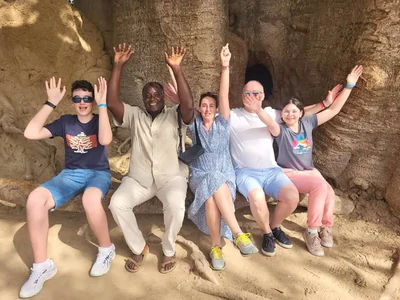
Demba Sene, guide and driver on the Petite Côte since 2000. He speaks French, English and Spanish.