Pink Lake, Senegal (Lake Retba): why it's pink, when to go and what to do
By Demba Sene · Published · 6 min read
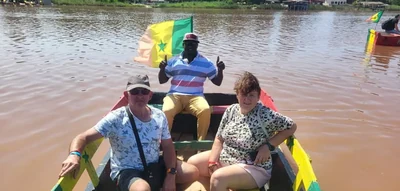
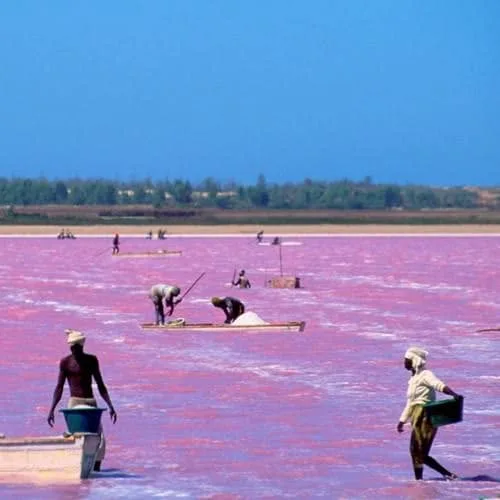
There are some places you think you know from photos, but they still manage to surprise you. The famous Pink Lake Senegal is a prime example. When the sun is high, its water takes on a pink, sometimes almost raspberry, hue, contrasting sharply with the white salt mounds and blue sky. Pirogues glide slowly, men work chest-deep in the water, and in the distance, dunes separate the lake from the ocean.
Here is everything you need to know to truly make the most of your visit.
Why is Pink Lake Senegal pink?
The Pink Lake, whose real name is Lake Retba, is a small, shallow lake of about 3 km². Its water is extraordinarily salty: about ten times saltier than the sea. In such water, almost nothing can live. Almost.
A micro-algae, Dunaliella salina, thrives here. To protect itself from the intense light and salt, it produces a red pigment. When it is abundant and the sun is strong, the entire lake is tinged with pink.
When the colour is at its best
The colour depends on the weather. It is most intense:
- during the dry season, from November to June, and often from late January to early March;
- on a clear day, with the sun high in the sky, around noon;
- when a bit of wind ripples the surface.
On an overcast day or at the end of the day, the lake appears paler, sometimes mauve or greyish. This is normal: it changes mood with the light.
A rediscovered colour
In 2022, very heavy rains raised the lake's level and diluted its salt. For several years, it lost its hue and turned a greyish colour. The good news: since the beginning of 2025, after pumping works, the pink has returned, and with it, the visitors.
The salt harvesters
The Pink Lake is not just a pretty backdrop. It is also a place of work, and this is perhaps what strikes visitors the most.
Men enter the water up to their chests. With long poles, they break the salt crust that forms at the bottom of the lake, then fill baskets which they empty into their pirogue. A full pirogue can carry about a ton of salt. To protect their skin from the very harsh salt, they coat themselves with shea butter.
On the shore, it is often the women who take over. They unload the pirogues, carry the salt in basins on their heads, and pour it into large mounds. In the sun, the salt gradually dries and whitens. These white mounds, lined up at the edge of the pink water, are among the most powerful images of Senegal.
The Pink Lake and the Paris-Dakar Rally
For years, the Pink Lake was the finish line of the famous Paris-Dakar rally. After weeks in the desert, the drivers would finish their race on the nearby beach. A stele pays tribute to Thierry Sabine, the creator of the rally. The last African edition took place in 2007; since then, the race has been held elsewhere, but the lake retains this adventurous spirit.
What to do at Pink Lake Senegal
The pirogue ride
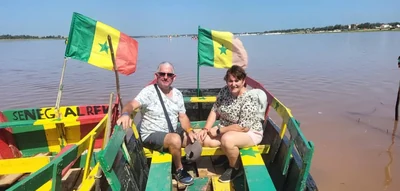
This is the unmissable experience. The pirogue trip on the Pink Lake takes you to the middle of the water, up close to the salt harvesters. The boatman shows you the salt at the bottom of the lake, and you can see the colour change with the angle of the sun.
The dunes and beach by 4x4 truck
Between the lake and the ocean stretch dunes of light-coloured sand. The 4x4 truck tour takes you across these dunes to the Atlantic beach on the Grande-Côte. A rally atmosphere is guaranteed, without the weeks in the desert.
Floating in the salty water
Like in the Dead Sea, the water is so salty that you can float effortlessly. Some visitors take a dip for the experience. If you do, keep your head out of the water, avoid it if you have small cuts, and rinse off with fresh water afterwards: the salt stings.
The artisan stalls
Around the lake, artisans sell sand paintings, jewellery, and souvenirs. Take the time to chat: this is often where you'll hear the best stories.
How to get to the Pink Lake from Saly
The Pink Lake is located on the other side of Dakar. From Saly, you take the toll motorway: allow about 1.5 to 2 hours of driving, depending on traffic. It makes for a great full-day trip, leaving in the morning to arrive when the colour is at its most beautiful.
Plan to bring:
- a hat, sunglasses, and sunscreen, as the sun reflects off the water and salt;
- plenty of water;
- sandals that can get wet;
- a towel and a change of clothes if you plan to swim.
All practical information is on the Pink Lake destination page.
If you like salt landscapes
The Pink Lake has a lesser-known cousin further south: the salt wells of Palmarin, at the gateway to the Sine-Saloum. Dozens of small white, pink, orange, or green pools where women harvest salt by hand. It's another way to discover this work, in an even wilder setting. Discover it with our Palmarin and its salt wells tour.
Frequently asked questions about the Pink Lake
Is the lake pink all year round?
It's mainly pink during the dry season and on sunny days. During the rainy season or on an overcast day, the colour is paler. Our article on [the best time to visit Senegal](/en/blog/best-time-to-visit-senegal) can help you choose the right period.
Can you swim in the Pink Lake?
Yes, and you can float very easily. Avoid putting your head under the water and be sure to rinse off thoroughly afterwards.
How much time should I plan for?
A full day from Saly, including travel time.
Can you combine the Pink Lake with a visit to Dakar?
It's possible, but it makes for a very long day. We recommend two separate trips to truly enjoy both.
The Pink Lake is a landscape that seems surreal, but it's also about the men and women who make a living from it every day. Come for the colour, you'll leave with the connections.
To find out more
Our sources, and some useful reading to prepare for your visit:

Demba Sene, guide and driver on the Petite Côte since 2000. He speaks French, English and Spanish.