Gorée Island and Dakar from Saly: the complete day-trip guide
By Demba Sene · Published · 6 min read
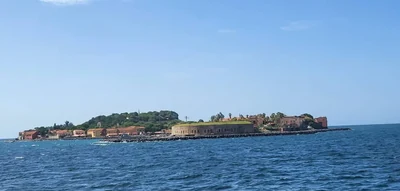
Some places you visit. Others, you feel. Gorée Island is one of the latter. A twenty-minute boat ride from Dakar, this small island with its ochre houses and flowering bougainvillea carries an immense history: that of the Atlantic slave trade. People come here to understand, to remember, and often leave changed. On the same day, Dakar shows you the other face of Senegal: a vibrant capital, looking towards the future.
Here's how to visit Gorée Island and Dakar in one day from Saly.
Getting to Gorée Island from Saly: The Drive and Ferry
We leave in the morning, after breakfast. The toll highway connects the Petite Côte to Dakar in about an hour to an hour and a half, depending on traffic at the entrance to the capital. Along the way, Demba will tell you about the country as it passes by: the villages, the baobab trees, the roadside markets.
Once at the port of Dakar, we board the chaloupe, the ferry that shuttles to the island. The crossing takes about twenty minutes. Gradually, Gorée comes into view: its colorful walls, its fort perched on the hill, its small beach. The view from the boat's deck is already a first memory.
Gorée Island: The Car-Free Island
Gorée is tiny: about 900 meters long and a few hundred meters wide. Here, there are no cars, no motorcycles. You walk through sandy alleys, between houses with colorful shutters and flowered courtyards. The noise of the city has vanished; you hear the sea, conversations, sometimes a guitar.
The island was successively occupied by the Portuguese, Dutch, English, and French, who left behind houses with balconies and forts. It is this architectural ensemble, and above all its value as a place of memory, that earned it a spot among the very first UNESCO World Heritage sites in 1978.
The House of Slaves
This is the heart of the visit. This house was built in the late 18th century (the year 1776 is most often cited). On the ground floor, narrow, dark cells; upstairs, the merchants' apartments. The contrast between the two is enough to understand what happened here.
Turned into a museum in 1962, the house was made famous by its curator, Boubacar Joseph Ndiaye, who dedicated his life to telling its story to visitors from all over the world.
The Door of No Return
At the end of a dark corridor, a door opens directly onto the ocean. It is called the "Door of No Return." Facing it, most visitors fall silent. Pope John Paul II in 1992, Nelson Mandela in 1997, Barack Obama in 2013: many great figures have come here to pay their respects.
A Place of Memory
Historians still debate Gorée's exact role in the slave trade and the number of people who passed through it. But they all agree on one point: the island has become one of the great memorial sites of the Atlantic slave trade, a place where people come to pay tribute to the millions of women, men, and children torn from Africa.
The Castel and the Rest of the Island
After the House of Slaves, we climb up to the Castel, the island's highest point. There you'll find old fortifications, old cannons, and above all, a magnificent view of Dakar and the ocean. Artists have set up their workshops here: painters, sculptors, sand painters. Take the time to watch them work.
Depending on the time available, you can also see:
- The Historical Museum, housed in the Fort d'Estrées;
- The Women's Museum, dedicated to the role of women in Senegalese society;
- The small beach near the pier, for a quiet moment before taking the ferry back.
Afternoon in Dakar
Back on the mainland, it's time for the capital.
The African Renaissance Monument
You can't miss it: this bronze statue, about 50 meters high, dominates Dakar from one of the two Mamelles hills in Ouakam. It depicts a man, a woman, and a child facing the ocean. It was inaugurated in April 2010, for the 50th anniversary of Senegal's independence. From the foot of the monument, the view of the city and the sea is superb.
The Mosque of the Divinity
On the Ouakam corniche, facing the ocean, the Mosque of the Divinity, inaugurated in 1997, offers one of Dakar's most beautiful sights, especially at the end of the day.
The Pointe des Almadies
The Almadies are the westernmost point of continental Africa. Standing there, facing the Atlantic, knowing there is no African land further west, feels special.
The Corniche and Kermel Market
The corniche road runs along the ocean between cliffs and beaches. In the city center, the Kermel market, rebuilt identically after a fire in 1993, brings together fishmongers, florists, and artisans under its beautiful hall.
The afternoon's program is adapted to your wishes and the time: we'll choose together what you'd prefer to see.
Typical Day Trip Itinerary
- Departure from your hotel in the morning.
- Drive to Dakar via the highway.
- Ferry to Gorée and tour of the island: House of Slaves, Castel, alleys.
- Lunch (on the island or in Dakar).
- Return by ferry, then a tour of Dakar: African Renaissance Monument, corniche, Almadies.
- Return to your hotel in the late afternoon.
All details are on the Dakar and Gorée Island page, and on the Gorée destination page and Dakar destination page.
Our Practical Tips
- Avoid Mondays, the usual closing day for the House of Slaves. We check the opening hours before each trip.
- Wear comfortable shoes: Gorée's alleys are sandy and the Castel is an uphill walk.
- Bring a hat, water, and sunscreen.
- Keep some change in CFA francs for small purchases and artisans.
- Ask before taking pictures of local people.
- Give yourself time: Gorée is not a place to be rushed.
Frequently Asked Questions about the Gorée Tour
Isn't the day too tiring?
It's the longest day of a week in Saly, but it's done at a relaxed pace. We recommend planning a quiet day for the following day.
Can you visit Gorée with children?
Yes. For younger children, we adapt the explanations at the House of Slaves, and they always love the boat crossing.
Can it be combined with the Pink Lake?
It's possible, but it makes for a very long day. We recommend a separate trip for the [Pink Lake](/en/blog/lac-rose-guide).
When is the best time to go?
All year round. The dry season, from November to June, is the most pleasant for walking through the island's sandy streets.
Gorée and Dakar make for a day that gives meaning to the rest of your trip. It fits perfectly into a week in Saly, between a safari and the beach.
To Go Further
Our sources, and some useful reading to prepare for your visit:
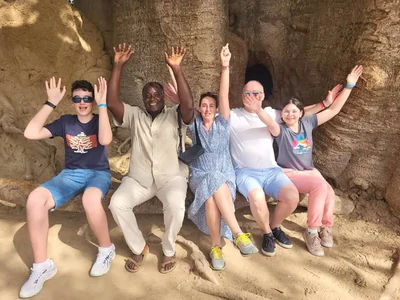
Demba Sene, guide and driver on the Petite Côte since 2000. He speaks French, English and Spanish.